
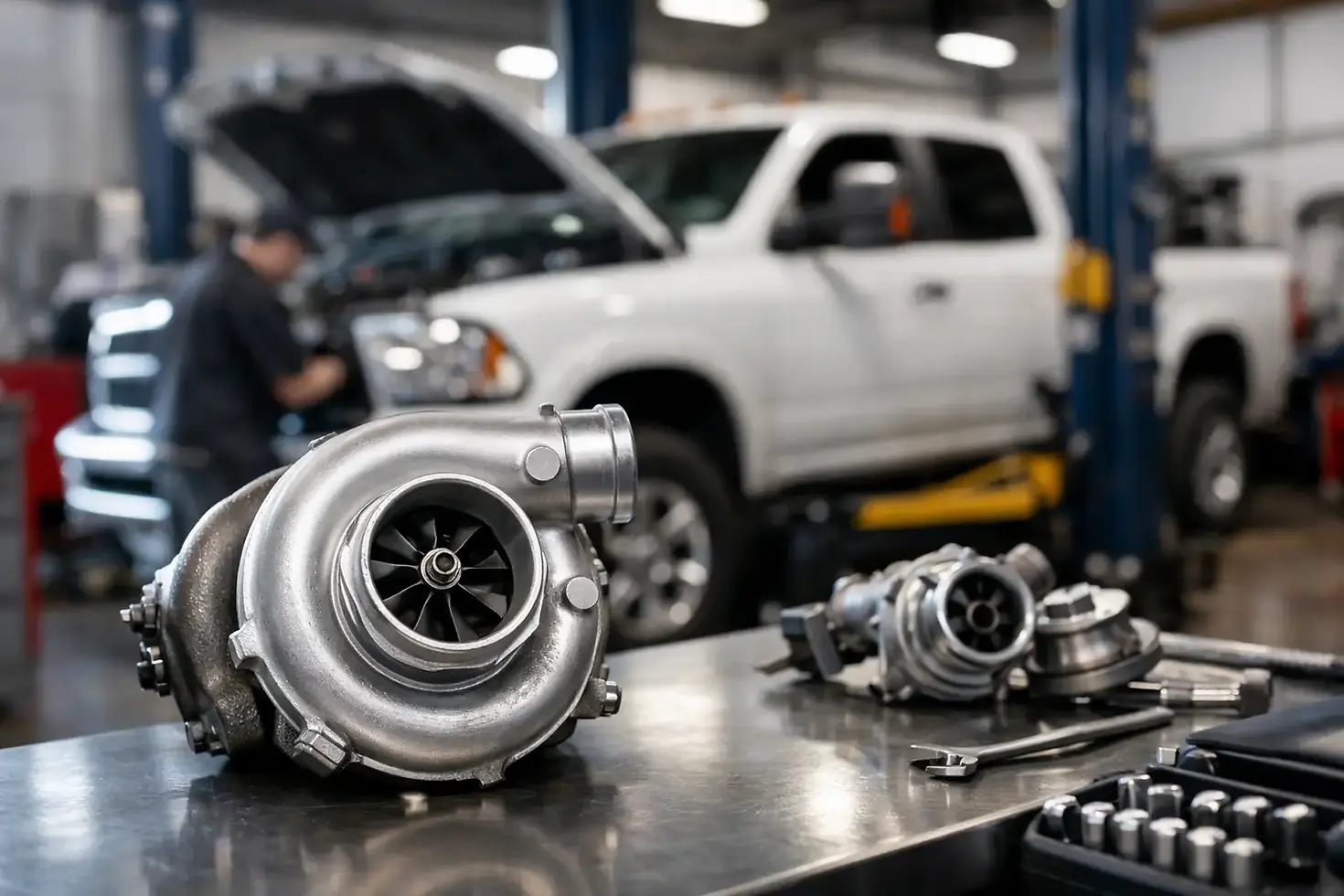
BC Best Turbo Shop for Diesel Service
- Jul 8
- 6 min read
When a turbo starts pushing oil, surging under load, or falling off on boost, the problem usually runs deeper than a simple parts swap. Anyone searching for a BC best turbo shop is usually dealing with lost power, rising fuel consumption, fault codes, smoke, or downtime that directly affects work. In diesel applications, the right shop is not just the one with inventory on the shelf. It is the one that can diagnose the full system, confirm the failure mode, and put the turbo back into service without creating the next problem upstream or downstream.
What makes a BC best turbo shop worth using
A real turbo specialist does more than sell a replacement cartridge and send you on your way. Turbocharger failure often connects to injector imbalance, fuel delivery problems, oil contamination, excessive exhaust temperature, intake restriction, boost leaks, or emissions-system issues. If the shop only addresses the turbo itself, there is a good chance the root cause stays in the machine.
That is why technical depth matters. The best shops work at component level. They inspect shafts, wheels, housings, seals, bearings, actuators, and control systems. They also understand how turbo performance interacts with diesel fuel systems, engine management, and duty cycle. That matters whether the engine is in a pickup, highway tractor, excavator, fishing vessel, farm machine, or industrial power unit.
For operators in British Columbia, that standard is especially important. Work trucks and equipment here often deal with heavy loads, long highway pulls, marine corrosion exposure, stop-and-go city operation, and seasonal temperature changes. Those conditions are hard on turbochargers, and they expose weak repairs very quickly.
Turbo problems are rarely turbo-only problems
One of the most common mistakes in the field is treating every boost complaint as a failed turbo. Sometimes the turbo is damaged. Sometimes it is a control issue. Sometimes the turbo has become the visible casualty of another engine problem.
A competent shop will look at the evidence before prescribing a rebuild or replacement. Oil at the compressor side might indicate seal issues, but it can also point to crankcase ventilation problems or restricted oil drain flow. Turbine damage can come from foreign material, but it may also be tied to excessive exhaust heat or fueling issues. Variable geometry turbo problems can be caused by carbon sticking, actuator faults, sensor problems, or software-related control behavior.
This is where a specialized diesel workshop separates itself from a general repair counter. Diagnosis should include the operating symptoms, the engine platform, the application, and the condition of related systems. If a shop can test injectors, evaluate pumps, inspect air and oil supply conditions, and verify actuator performance, the repair has a much better chance of holding.
Rebuild, reman, or replace depends on the unit
Not every turbo should be replaced with a new assembly. Not every turbo should be rebuilt either. The right answer depends on the condition of the hard parts, the application, parts availability, and the consequences of downtime.
A quality rebuild makes sense when the housings and major rotating components are salvageable, the failure is identifiable, and the unit can be returned to specification with proper balancing, inspection, and replacement of wear items. Remanufacturing is often the right path for many diesel customers because it restores function at a controlled cost, especially when the work is done with proper equipment and quality components.
There are trade-offs. On some applications, particularly where updated OEM components or control modules are involved, a new or OEM-spec replacement may be the better decision. On older or harder-to-source units, rebuilding may be the most practical way to get a machine back online. A shop that understands both paths can give you a straight answer instead of pushing one option every time.
Why calibration and testing matter
Turbocharger work is precision work. Clearances are tight, rotational speeds are extreme, and small errors show up fast once the engine is under load. That is why testing and calibration are not optional extras.
A serious turbo shop uses controlled inspection and test procedures to verify the condition of the unit and its related controls. For variable geometry systems, that includes checking actuator function and vane movement. For diesel engines with fueling concerns, it also helps to evaluate injectors and pumps when the symptoms overlap. Poor atomization, overfueling, and inconsistent cylinder contribution can all affect turbo life and exhaust behavior.
This is one reason a full-service diesel component shop has an advantage over a standard reseller. If turbocharger service is backed by in-house diagnostics, bench testing, cleaning, and calibration capability, you are not guessing. You are measuring. That difference matters when the engine supports commercial hauling, marine operation, agriculture, or industrial production.
The BC best turbo shop should understand your application
Application matters as much as the part number. A turbo on a light-duty diesel pickup sees a different operating pattern than a turbo on a Class 8 truck, a wheel loader, or a marine diesel. Duty cycle, load profile, ambient conditions, and maintenance history all affect how a unit fails and what kind of repair will last.
For fleet operators, consistency matters. You need repairs that can be documented, repeated, and supported across multiple units. For owner-operators, the priority is usually a balance of cost control, turnaround time, and long-term reliability. For agricultural and construction equipment, the issue is often seasonal urgency. When a machine is down during the wrong window, the repair cost is only part of the problem.
A shop that routinely works across Cummins, Caterpillar, Volvo, Bosch, Denso, Stanadyne, and other major platforms will usually spot patterns faster. Brand familiarity shortens diagnosis time and reduces the chances of replacing good components while the real fault remains untouched.
What to ask before handing over your turbo
If you are comparing shops, ask how they determine whether a turbo is rebuildable, what they inspect beyond the turbo itself, and whether they can support related fuel system diagnosis. Ask whether they handle diesel injectors, pumps, actuators, and installation support in the same operation. Those answers tell you whether you are dealing with a true diesel specialist or a parts counter with limited technical reach.
It also makes sense to ask about turnaround expectations and parts quality. Fast service is valuable, but only if the work is done properly. Cheap internal components, poor balancing, or skipped testing will come back as repeat failure, noise, poor response, oil consumption, or renewed fault codes.
Documentation matters too. A good shop should be able to explain the likely cause of failure in plain terms and tell you what else should be checked before reinstalling the unit. That guidance can prevent a second failure caused by contaminated oil lines, intake debris, charge air leaks, or unresolved fueling issues.
One-stop diesel support reduces downtime
The shops that save customers the most time are usually the ones that can handle the surrounding systems in-house. If the turbo comes off and the injectors also need testing, or the high-pressure pump shows delivery issues, or the complaint turns out to be calibration-related, you do not want to move the job between three different vendors.
That one-stop model is where a specialist such as West Coast Fuel Injection & Turbo Ltd. stands out. For diesel customers in BC, especially those working across Richmond, Vancouver, Surrey, Langley, Abbotsford, Vancouver Island, Victoria, Nanaimo, Kelowna, and Penticton, access to a workshop that handles turbochargers, injectors, pumps, diagnostics, rebuilds, remanufacturing, and installation support under one roof is not just convenient. It is operationally smarter.
The practical benefit is simple. Fewer handoffs mean fewer delays, fewer assumptions, and a better chance of fixing the actual cause the first time.
Why the cheapest option often costs more
Turbocharger repairs sit in a category where shortcuts are expensive. A low-price repair can look attractive when a truck or machine is already costing money by sitting still. But if that repair ignores oil feed contamination, actuator faults, exhaust restriction, injector imbalance, or improper calibration, the comeback risk goes way up.
That does not mean the most expensive option is automatically the right one. It means value comes from correct diagnosis, correct parts, and workmanship that fits the application. Fair pricing and technical accuracy are a better combination than low entry cost followed by repeat labor and another failure.
For diesel operators, uptime is usually the real metric. A turbo that lasts, performs correctly, and protects the rest of the engine is worth more than a quick fix that only gets the unit through the week.
If you are looking for the BC best turbo shop, look for a diesel specialist that can diagnose the system, not just replace the symptom. The right shop will treat the turbocharger as part of the engine's full air and fuel equation, and that is how you keep power, reliability, and uptime where they belong.
Comments