
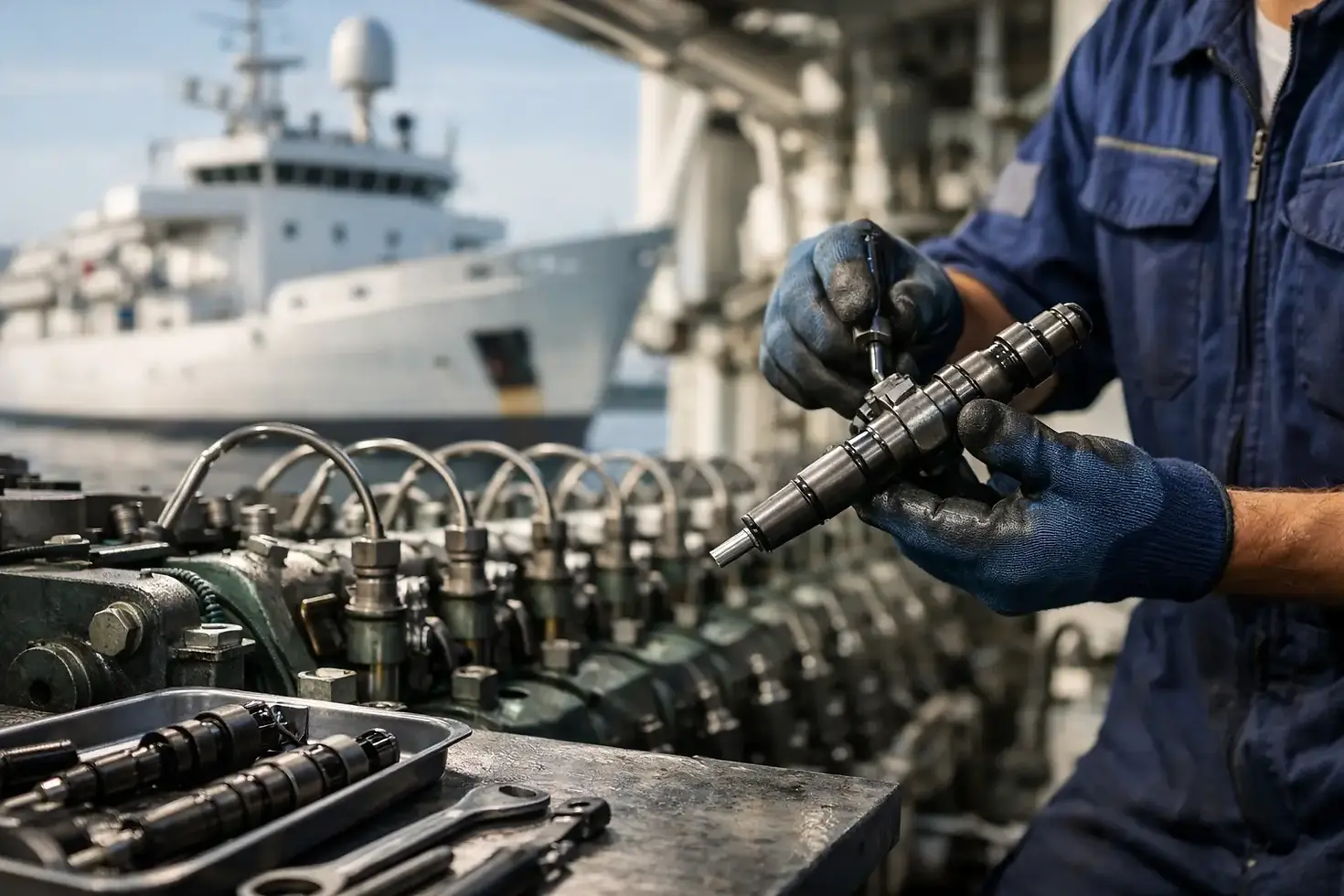
Marine Diesel Fuel Injection Service for Reliable Uptime
- Jul 18
- 6 min read
A marine engine can sound normal at the dock and still have a fuel-system problem developing beneath the surface. A slight miss under load, harder starting after an overnight stop, rising fuel consumption, or a haze of exhaust can all point to issues that become far more serious offshore. Professional marine diesel fuel injection service is designed to find those faults at the component level before they turn into lost operating time, unsafe conditions, or expensive engine damage.
Unlike many road applications, a marine diesel engine may run for extended periods at a steady load, operate in damp and corrosive conditions, and be expected to perform when there is no convenient repair facility nearby. That makes injector spray quality, injection timing, pump delivery, fuel cleanliness, and calibration more than routine maintenance concerns. They directly affect vessel reliability.
Why Marine Fuel Systems Need Specialized Attention
Diesel fuel injection equipment works to fine tolerances. Injectors must open at the proper pressure, deliver the correct amount of fuel, and atomize it into a consistent spray pattern. Injection pumps or high-pressure common rail pumps must supply fuel at the required pressure and volume throughout the engine's operating range.
When one part of that system drifts out of specification, the engine may still run. The problem is that it may run hotter, consume more fuel, smoke excessively, or place uneven load on individual cylinders. On a marine engine, those conditions can build over long operating hours.
Salt air, moisture intrusion, contaminated fuel, microbial growth in tanks, long periods of storage, and inconsistent fuel quality all add risk. Water in diesel fuel can corrode precision pump and injector parts. Fine debris can score internal components or restrict injector nozzles. A sticking injector can overfuel a cylinder, while a restricted injector can create a lean, high-temperature combustion event. Neither condition should be diagnosed by guesswork.
Signs It Is Time for Marine Diesel Fuel Injection Service
Fuel-system issues do not always appear as a complete no-start condition. In many cases, the warning signs are gradual and can be mistaken for a turbocharger problem, dirty filters, poor fuel, valve-train issues, or general engine wear.
Watch for hard starting, rough idle, unstable RPM, power loss under load, increased fuel use, uneven exhaust temperature, excessive black, white, or gray smoke, fuel odor, or unusual diesel knock. On electronically controlled engines, fault codes and rail-pressure data can provide useful direction, but they do not replace physical testing of injectors and pumps.
A single weak cylinder can be especially difficult to identify without the right equipment. Cylinder cutout testing, scan data, fuel pressure checks, return-flow testing, and exhaust temperature readings can narrow the problem. The final answer may require removing the injectors or pump for bench testing.
Smoke Color Can Help, But It Is Not a Diagnosis
Black smoke often suggests incomplete combustion caused by excess fuel, insufficient air, poor atomization, restricted intake airflow, or a turbocharger-related concern. White or gray smoke may point to unburned fuel, poor compression, incorrect timing, water contamination, or a cold-cylinder issue. Blue smoke is more commonly associated with oil consumption, though fuel-system faults can sometimes contribute to poor combustion conditions.
Smoke should be treated as a clue. Replacing injectors based on smoke color alone can waste time and money, particularly when the actual cause is an air leak, restricted fuel supply, contaminated fuel, or a failing turbocharger.
What a Proper Fuel Injection Service Includes
A complete marine fuel injection service starts with identifying the engine platform, fuel-system design, operating symptoms, maintenance history, and fuel quality concerns. Mechanical injection systems, unit injectors, common rail systems, and older rotary or inline pump systems require different procedures and test equipment.
The service process typically includes diagnostic checks on the engine, followed by component-level inspection and testing when needed. Injectors may be cleaned, disassembled, inspected for wear, fitted with quality replacement parts, calibrated, and tested for opening pressure, leakage, delivery, and spray pattern. High-pressure pumps can be inspected and tested for pressure, fuel delivery, internal leakage, timing performance, and governor operation where applicable.
For common rail systems, injector coding and calibration values may be required after installation. Correct coding allows the engine control module to apply the calibration data associated with each injector. Skipping this step can leave an engine with rough operation, imbalance, or incorrect fueling even after quality parts have been installed.
A capable fuel shop also evaluates the cause of component failure. If injectors failed because of water-contaminated fuel or deteriorating fuel hoses, installing rebuilt units without correcting the contamination source risks repeating the repair. The fuel tank, pickup, filters, water separator, supply lines, return circuit, and venting system may all need attention before repaired components go back into service.
Bench Testing Is Where Assumptions End
An injector may look acceptable externally and still fail on a test bench. Internal nozzle wear, weak springs, sticking control valves, excessive return flow, poor atomization, and incorrect opening pressure are not always visible during an onboard inspection.
Bench testing provides measurable results. It allows a technician to compare actual delivery and operating behavior against manufacturer specifications. This matters when servicing engines from Cummins, Caterpillar, Volvo, Bosch, Denso, Stanadyne, and other major diesel platforms, where component design and calibration requirements vary significantly.
The same principle applies to injection pumps. A pump may generate some pressure but fail to deliver consistent volume across the operating range. On an older mechanical engine, incorrect pump timing or uneven cylinder delivery can create hard starting, smoke, and poor power. On a modern high-pressure system, internal pump wear can release metallic debris that damages injectors, rails, and other expensive components.
If metal contamination is found, the repair scope often needs to expand. The affected fuel system must be cleaned thoroughly, and compromised components may need replacement rather than a limited repair. This is a more involved job, but it is preferable to installing new or remanufactured injectors into a contaminated system.
Repair, Rebuild, or Replace: The Right Answer Depends
Not every injector or pump needs replacement, and not every component is a good candidate for rebuilding. The correct path depends on the make and model, the level of internal damage, parts availability, contamination history, and the engine's service demands.
A serviceable mechanical injector may respond well to professional cleaning, new nozzle components, calibration, and testing. A worn common rail injector may require remanufacturing with precisely matched internal parts and final calibration. In other cases, especially when corrosion, body damage, electronic failure, or severe contamination is present, a new OEM or quality replacement unit may be the most dependable option.
Cost matters, but so does the cost of a repeat failure. For a commercial vessel, a lower initial repair price can become expensive if the engine returns with the same symptoms during a busy operating season. The goal is not simply to get the engine running. It is to restore fuel delivery to a condition that supports reliable operation under load.
Installation Practices Matter as Much as the Component
Even a properly calibrated injector can fail early if installation conditions are poor. Injector bores should be clean, sealing surfaces inspected, correct seals installed, and torque procedures followed. Fuel lines must be clean and correctly routed. High-pressure lines should never be bent, reused against manufacturer guidance, or installed with damaged sealing surfaces.
After installation, the system must be primed correctly and checked for leaks. The engine should then be evaluated at idle and under operating load where possible. A repair that appears successful at the dock may reveal fuel starvation, air intrusion, boost issues, or temperature imbalance only after the engine is working hard.
For marine operators in Richmond, Vancouver, Vancouver Island, Victoria, Nanaimo, and other coastal service areas, component turnaround and accurate testing can make a real difference when a vessel's schedule is on the line. West Coast Fuel Injection & Turbo Ltd. provides diagnostics, bench testing, calibration, rebuilding, remanufacturing, and installation support for marine injectors, high-pressure pumps, and related diesel components.
Preventing the Next Fuel-System Failure
The most effective fuel-system maintenance begins with clean, dry fuel. Drain water separators regularly, use quality filtration, inspect filter housings and seals, and address tank contamination rather than repeatedly changing plugged filters. Vessels that sit for long periods should have their fuel condition assessed before returning to regular service.
Keep maintenance records for injector work, pump service, fuel-filter changes, and recurring operating symptoms. A trend in fuel consumption, smoke, cranking time, or exhaust temperature is useful diagnostic information. It gives a fuel-system specialist a clearer picture than a single complaint of “low power.”
When an engine begins to lose its clean, even pull under load, schedule testing before the problem dictates the timing. A measured diagnosis and correctly calibrated fuel components are practical insurance for the hours when your engine has no room to quit.
Comments