
Surrey Fuel Pump Repair Guide for Diesel Owners
A no-start diesel truck after a cold Surrey morning is not automatically a failed fuel pump. A restricted filter, air entering a suction line, weak lift-pump supply, contaminated fuel, or an electrical control fault can produce nearly identical symptoms. This Surrey fuel pump repair guide explains how to separate a true pump failure from the surrounding faults that must be corrected before a repair can last.
Fuel pumps are precision components, particularly on common-rail systems. A pump may operate at pressures high enough to cause severe injury, while contamination small enough to be hard to see can damage internal pumping elements, injectors, rails, and control valves. Proper diagnosis protects the engine and avoids replacing expensive parts based on a guess.
Know Which Fuel Pump the Engine Uses
The term fuel pump covers several different components. Many diesel engines have a low-pressure lift pump that draws fuel from the tank and supplies the filter and high-pressure pump. It may be mechanical, electric, or integrated into a fuel module. Its job is volume and consistent supply pressure, not injection pressure.
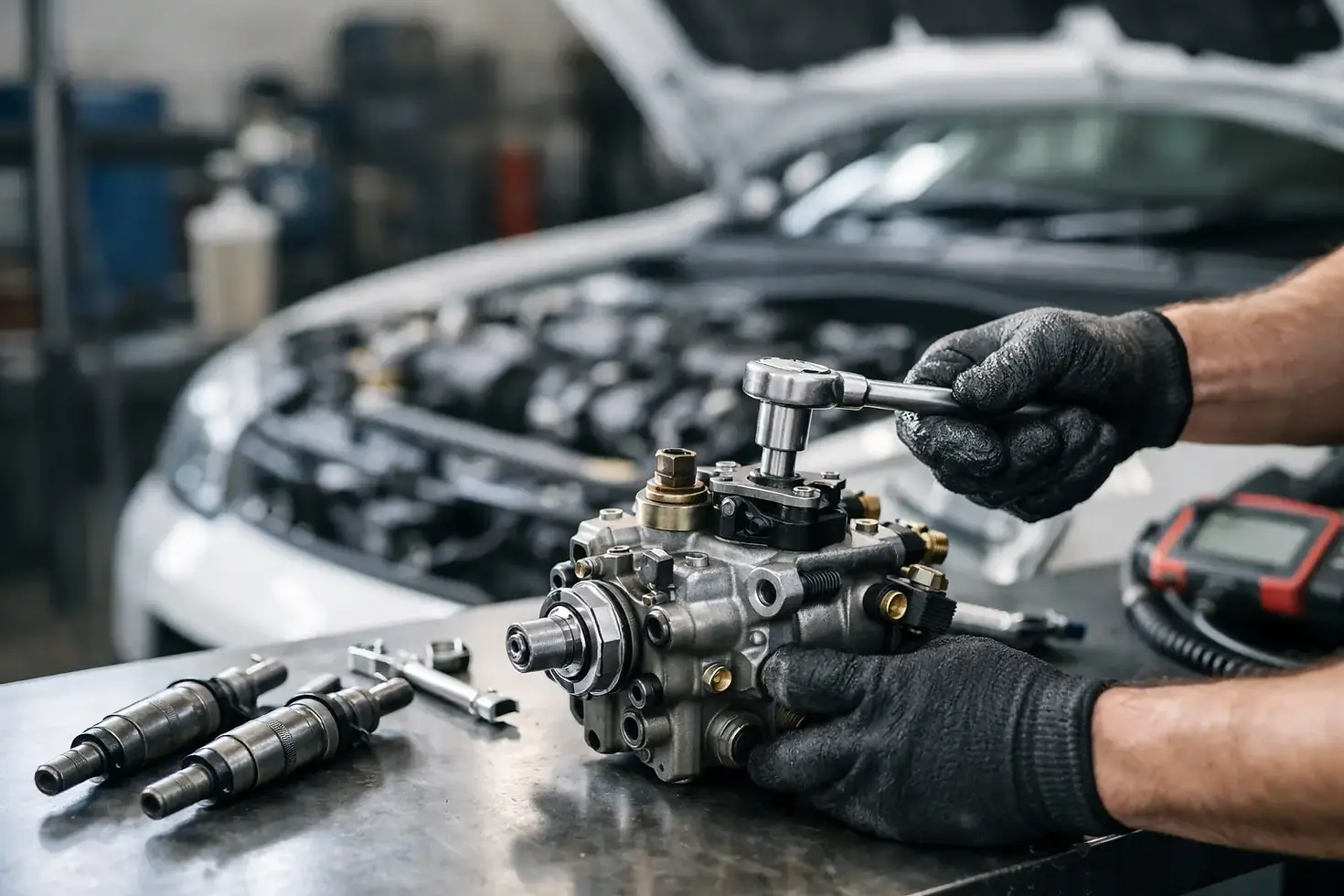
The high-pressure fuel pump is a different class of component. On modern Cummins, Duramax, Power Stroke, Bosch, Denso, and many industrial engines, it compresses fuel for the rail and injectors. These pumps are built to close tolerances and depend on clean, lubricating fuel. Mechanical rotary and inline injection pumps found on older trucks, agricultural equipment, generators, and marine engines combine pumping and fuel-metering functions, often with their own calibration requirements.
The repair approach depends completely on pump type. A failed electric lift pump may be confirmed with electrical and volume testing. A high-pressure common-rail pump requires controlled pressure testing, inspection for metal contamination, and often a broader system assessment. Treating them as the same problem leads to missed failures.
Symptoms That Point Toward a Fuel Supply Problem
Hard starting, extended cranking, stalling under load, low power, surge, rough running, and a low-rail-pressure fault can all involve the fuel system. However, each symptom needs context. A truck that loses power climbing a grade may have a plugged filter or restricted tank pickup. An engine that cranks normally but will not start may lack rail pressure, but it may also have excessive injector return flow or a sensor issue.
Pay attention to when the problem occurs. Trouble after refueling raises the possibility of water or poor-quality fuel. A fault that starts after filter service may indicate a seal, drain valve, or priming issue. Intermittent power loss on a commercial truck can point to debris moving around a tank pickup or a restriction that becomes significant only at high fuel demand.
Warning signs that deserve immediate attention include visible metallic debris in the fuel filter, fuel that appears cloudy or contains water, a sudden change in pump noise, and repeated low-pressure or low-rail-pressure codes. Continuing to operate with these conditions can turn a pump repair into a complete fuel-system repair.
Surrey Fuel Pump Repair Guide: Start With Diagnosis
The most useful repair decision is made before any major component is removed. A qualified diesel shop begins with the engine’s reported fault codes and live data, then verifies the basics: fuel quality, filter condition, low-side pressure or vacuum, battery voltage during cranking, and the integrity of fuel lines and connectors.
On a common-rail engine, commanded rail pressure and actual rail pressure are compared during cranking, idle, and load. If actual pressure cannot reach the required value, the cause may be the high-pressure pump, a metering valve, a pressure control valve, internal injector leakage, or a low-side supply fault. Removing a pump before narrowing those possibilities wastes time and may leave the original cause unresolved.
Mechanical pumps call for a different process. Timing, throttle linkage, transfer pressure, governor operation, delivery balance, shaft condition, and external leakage all matter. Bench testing is often the only reliable way to confirm delivery and calibration across the operating range. A pump that appears acceptable at idle can still fail to provide correct fuel quantity when the engine is working.
A proper diagnostic process also includes inspecting the tank and filter media when contamination is suspected. Finding metal in the filter is especially serious on high-pressure systems. The source must be identified, and the repair scope may include cleaning or replacing lines, the rail, injectors, filters, and tank components. Installing a rebuilt pump into a contaminated system risks immediate repeat failure.
What Can Be Repaired and What Should Be Rebuilt
Some fuel-pump faults are external and repairable without a full rebuild. Examples include a damaged electrical connector, leaking line fitting, failed pressure sensor, worn fuel hose, faulty relay, or a failed lift-pump module. These repairs are still important because low supply pressure can starve a high-pressure pump and accelerate wear.
When a high-pressure pump has internal scoring, poor output, a seized pumping element, damaged cam surfaces, or metal contamination, replacement or professional rebuilding is usually the sounder option. Internal clearances, timing relationships, and pressure output cannot be verified by appearance alone. Rebuild work should include complete disassembly, cleaning, inspection, quality replacement components where applicable, calibration, and bench verification.
The same applies to mechanical injection pumps. Replacing exterior seals may stop a leak, but it will not correct weak delivery, erratic governor response, worn head-and-rotor components, or incorrect calibration. For equipment where uptime matters, such as a farm tractor during harvest or a marine engine supporting commercial work, a tested and calibrated pump is worth more than a quick seal-only repair that leaves the underlying wear in place.
Do Not Skip the Cause of the Failure
Fuel pumps rarely fail without a reason. Water is a frequent cause because it reduces lubricity and promotes corrosion. Dirt damages precision surfaces. Gasoline mixed into diesel can sharply reduce lubrication in systems designed to use diesel fuel. A blocked filter, collapsed hose, plugged tank vent, or failing lift pump can create supply starvation. On some applications, incorrect installation or improper timing creates additional risk.
After a pump problem is confirmed, inspect the complete path from tank to injectors. This includes the tank condition, pickup tube, fuel lines, filter housing, water separator, lift-pump performance, electrical supply, pressure-control components, and injectors. The scope should match the evidence. Not every failed lift pump requires an injector inspection, but metallic debris from a high-pressure pump demands a far more complete response.
Use the correct fuel filter and service interval for the application. A light-duty pickup used for short trips has different operating demands than a heavy-duty truck, excavator, fishing vessel, or standby generator. In wet or variable fuel-storage conditions, draining water separators and monitoring fuel quality becomes even more important.
Installation Details That Protect the Repair
A replacement or rebuilt pump needs a clean installation environment. Cap open lines, prevent debris from entering fittings, and use only approved cleaning procedures. Never use shop rags that shed fibers inside a fuel-system connection. Replace seals, O-rings, and single-use hardware as specified for the engine.
Priming matters. Running a diesel system dry can create unnecessary stress and may prevent a clean start. Follow the manufacturer’s procedure for priming the low-pressure side and clearing air. Do not loosen high-pressure injector lines on a common-rail system to bleed fuel. Those circuits are hazardous and should be handled with the correct equipment and procedures.
Once the engine starts, verify for leaks, check live pressure data, confirm fault codes do not return, and road-test or load-test the machine when appropriate. A pump repair is not complete until the engine produces stable pressure and performs correctly under the conditions that caused the original complaint.
When Specialist Testing Makes Sense
Fleet operators, owner-operators, equipment managers, and independent mechanics often know when a fuel issue has moved beyond field diagnosis. If rail pressure remains low after supply testing, if a mechanical pump needs calibration, or if contamination is present, specialist service reduces the risk of repeat downtime.
West Coast Fuel Injection & Turbo Ltd. provides diagnostic support, bench testing, calibration, rebuilding, and installation guidance for diesel pumps across light-duty, heavy-duty, industrial, agricultural, and marine applications. For Surrey-area equipment owners, a component-level diagnosis can help determine whether the practical answer is a repair, a tested rebuild, or a broader fuel-system cleanup.
The best next step is not to order a pump because the symptoms sound familiar. Preserve the evidence, inspect the fuel, document fault codes, and test the supply side first. That disciplined approach gives the repaired system its best chance of delivering dependable service when the engine is needed most.
Comments