
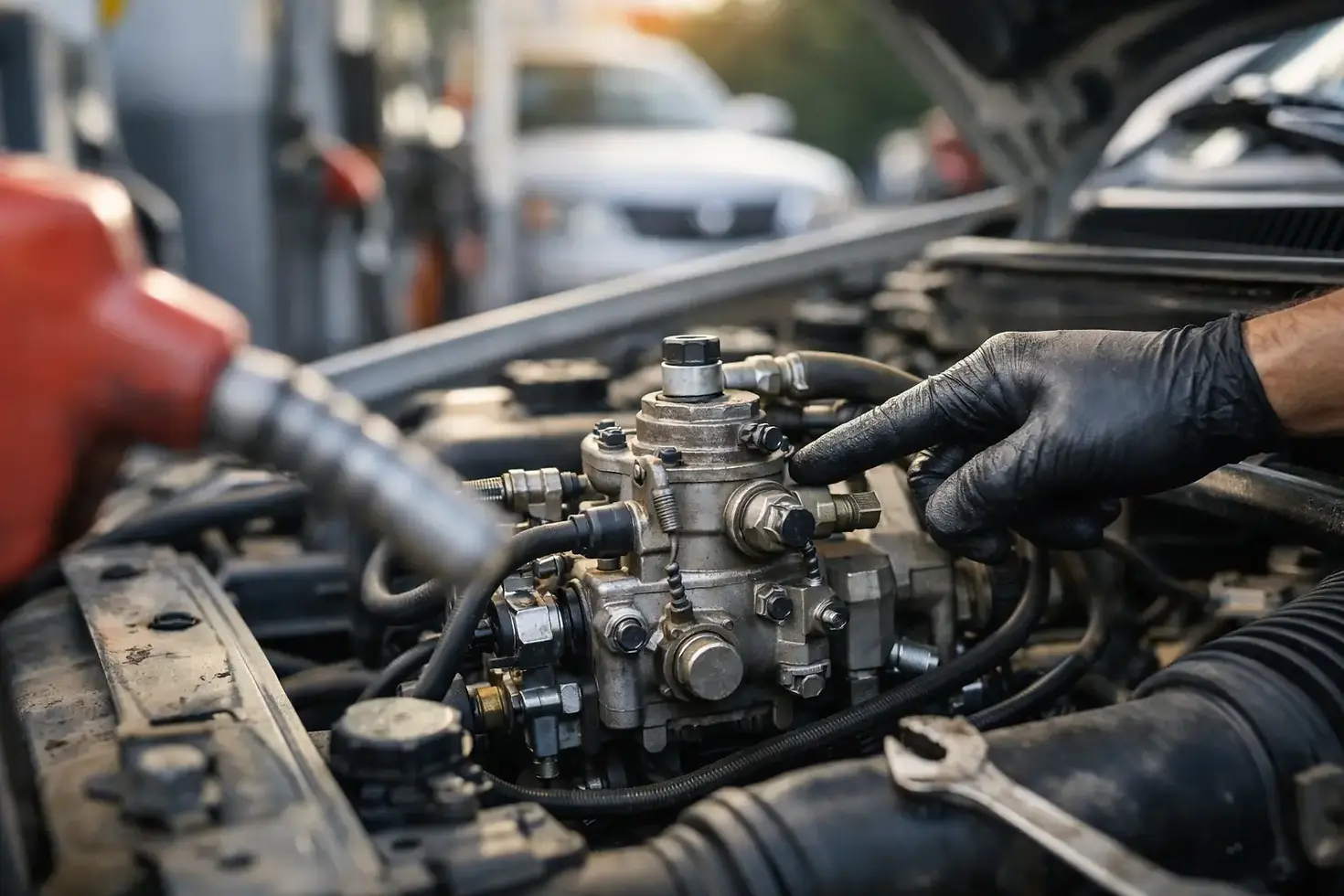
Top Signs of Fuel Pump Failure in Diesel Engines
A diesel engine that cranks longer than normal, loses power under load, or suddenly derates is not always dealing with an injector problem. The top signs of fuel pump failure can overlap with restricted filters, air leaks, contaminated fuel, sensor faults, and electrical supply issues. That is why replacing parts based on symptoms alone can turn a manageable repair into unnecessary downtime.
On modern common-rail engines, the high-pressure fuel pump is a precision component responsible for supplying the pressure the injectors need to atomize fuel correctly. On older mechanical systems, an injection pump controls both fuel delivery and timing. Either way, a pump problem can affect starting, power, smoke output, fuel economy, and the long-term condition of the entire fuel system.
Top Signs of Fuel Pump Failure in a Diesel Engine
Hard starting or extended cranking
A pump that cannot build or maintain required pressure may cause long cranking before the engine starts. The problem is often more noticeable after the vehicle or equipment has sat overnight, after a hot shutdown, or during cold weather.
Hard starting does not automatically condemn the pump. A clogged fuel filter, weak lift pump, air entering the suction side, low battery voltage, worn injectors, or a faulty rail-pressure sensor can create a similar complaint. The useful distinction is what the pressure data shows during cranking. If commanded pressure is present but actual pressure cannot reach the starting threshold, the fuel system needs proper testing before the engine is repeatedly cranked.
Power loss under load
An engine may idle smoothly and drive acceptably with no load, then fall flat while climbing a grade, pulling a trailer, accelerating, or operating hydraulic equipment. This is one of the more common signs of inadequate fuel supply.
Under load, the engine requires greater fuel volume and, on common-rail systems, stable high pressure. A worn high-pressure pump, failing supply pump, restricted pickup, plugged filter, or collapsing fuel hose may not show itself until demand increases. In heavy-duty trucks, agricultural equipment, marine engines, and industrial applications, this can be mistaken for a turbocharger issue because both faults reduce available power.
Stalling, surging, or hesitation
Intermittent stalling or a noticeable surge can occur when fuel pressure drops unexpectedly. The engine may stumble during acceleration, hesitate at steady speed, or die and restart after sitting for several minutes.
These symptoms require careful diagnosis because they can also come from fuel contamination, water in the separator, poor electrical connections, a failing fuel-pressure control valve, or air intrusion. A technician should inspect low-pressure supply performance as well as high-pressure readings. Testing only the high-pressure pump without checking the feed side can miss the actual source of the problem.
Check-engine light, derate, or fuel-pressure codes
Modern diesel ECMs closely monitor rail pressure. When actual pressure is too low, too high, or unable to follow the commanded value, the engine may set a fault code, limit power, or enter a derate mode to prevent damage.
Codes related to fuel pressure are valuable starting points, not a complete diagnosis. A low-rail-pressure code may indicate pump wear, but it may also point to excessive injector return flow, a leaking pressure relief valve, a failed metering valve, restricted fuel supply, or wiring damage. Reading live data during cranking, idle, and load is more useful than clearing the code and assuming the pump is at fault.
Unusual noise from the fuel system
Whining, growling, or an unusually loud electric lift pump can indicate restriction or a component that is working harder than it should. Mechanical pumps may produce abnormal noise when internal components are worn or when they are being fed aerated or contaminated fuel.
Noise by itself is not enough to diagnose a pump failure. Still, a new noise combined with hard starting, loss of power, or pressure-related codes should be checked promptly. Continuing to run a fuel pump that is cavitating or operating with poor lubrication can accelerate internal damage.
Fuel leaks or fuel in the engine oil
External diesel leaks around the pump, fittings, lines, or seals need immediate attention for both safety and system reliability. On certain engines, an internal pump seal failure can allow fuel to enter the crankcase. A rising oil level, a strong diesel smell in the engine oil, or oil that has become unusually thin may indicate fuel dilution.
Do not keep operating an engine with suspected fuel dilution. Diesel-contaminated oil loses lubricating ability and can damage bearings, turbocharger components, and other lubricated engine parts. The source may be an injection pump, injector, or another fuel-system component, so confirmation matters.
Metal debris in the fuel system
Metal particles found in a fuel filter, fuel sample, pump inlet, or rail system are among the most serious warning signs. When a high-pressure fuel pump suffers internal wear or failure, it can send metallic debris downstream through the rail, injectors, lines, and return circuit.
This is not usually a repair where replacing only the pump is enough. Depending on the engine and severity of contamination, the repair may require cleaning or replacing lines, rails, injectors, filters, tanks, and related components. The goal is to prevent remaining debris from damaging a replacement pump or rebuilt injectors as soon as the engine is started.
Why Fuel Pumps Fail
Fuel pumps rely on clean fuel, correct supply pressure, proper lubrication, and sound electrical or mechanical control. Contaminated fuel is a major cause of damage. Water can corrode precision internal surfaces, while dirt and abrasive particles score plungers, barrels, valves, and metering components.
Restricted filters and poor low-pressure supply can also shorten pump life. A high-pressure pump that is starved of fuel may overheat or cavitate. On electronically controlled systems, failed metering valves, pressure-control valves, damaged connectors, poor grounds, or control-module faults may mimic an internal pump failure.
Age and normal wear remain factors, particularly on hard-working equipment. Fleet trucks, construction machinery, farm equipment, and marine engines often operate for long periods under load. Maintenance intervals, fuel storage practices, and the quality of filtration have a direct effect on how long the system lasts.
Do Not Confuse Pump Failure With Other Fuel-System Faults
The same complaint can have several causes. For example, a low-pressure condition on a common-rail engine may be caused by excessive injector return flow rather than a weak high-pressure pump. A restricted tank pickup or plugged filter can create a supply issue that looks like pump wear. Air leaks can be especially difficult because they may not leave an external fuel leak.
A complete evaluation should include fuel quality inspection, filter condition, low-side supply pressure or vacuum checks, scan-tool data, rail-pressure testing, electrical circuit checks, and injector return-flow testing where applicable. Mechanical injection systems may require timing checks and calibrated bench testing of the pump.
This process matters because high-pressure diesel components are expensive and precise. Replacing injectors, pumps, or rails without identifying the root cause can lead to repeat failure and more downtime.
When Professional Pump Testing Is the Right Move
If the engine has repeat low-pressure codes, hard starting, power loss under load, or evidence of metal contamination, professional testing should not be delayed. High-pressure common-rail systems can operate at pressures capable of causing serious injury. Never loosen high-pressure lines or attempt to check for leaks with your hands while the engine is running.
A specialist fuel shop can test the pump and related components against manufacturer specifications, inspect contamination, verify calibration, and determine whether repair, rebuild, remanufacturing, or replacement is the appropriate path. West Coast Fuel Injection & Turbo supports diagnosis, bench testing, calibration, and rebuild services for diesel pumps, injectors, and related fuel-system components across demanding on-road, industrial, agricultural, and marine applications.
If a diesel engine is showing early fuel-system symptoms, address the cause while the repair is still contained. A clean fuel sample, accurate pressure readings, and component-level testing can protect the injectors, reduce downtime, and keep a small drivability complaint from becoming a full-system repair.
Comments