
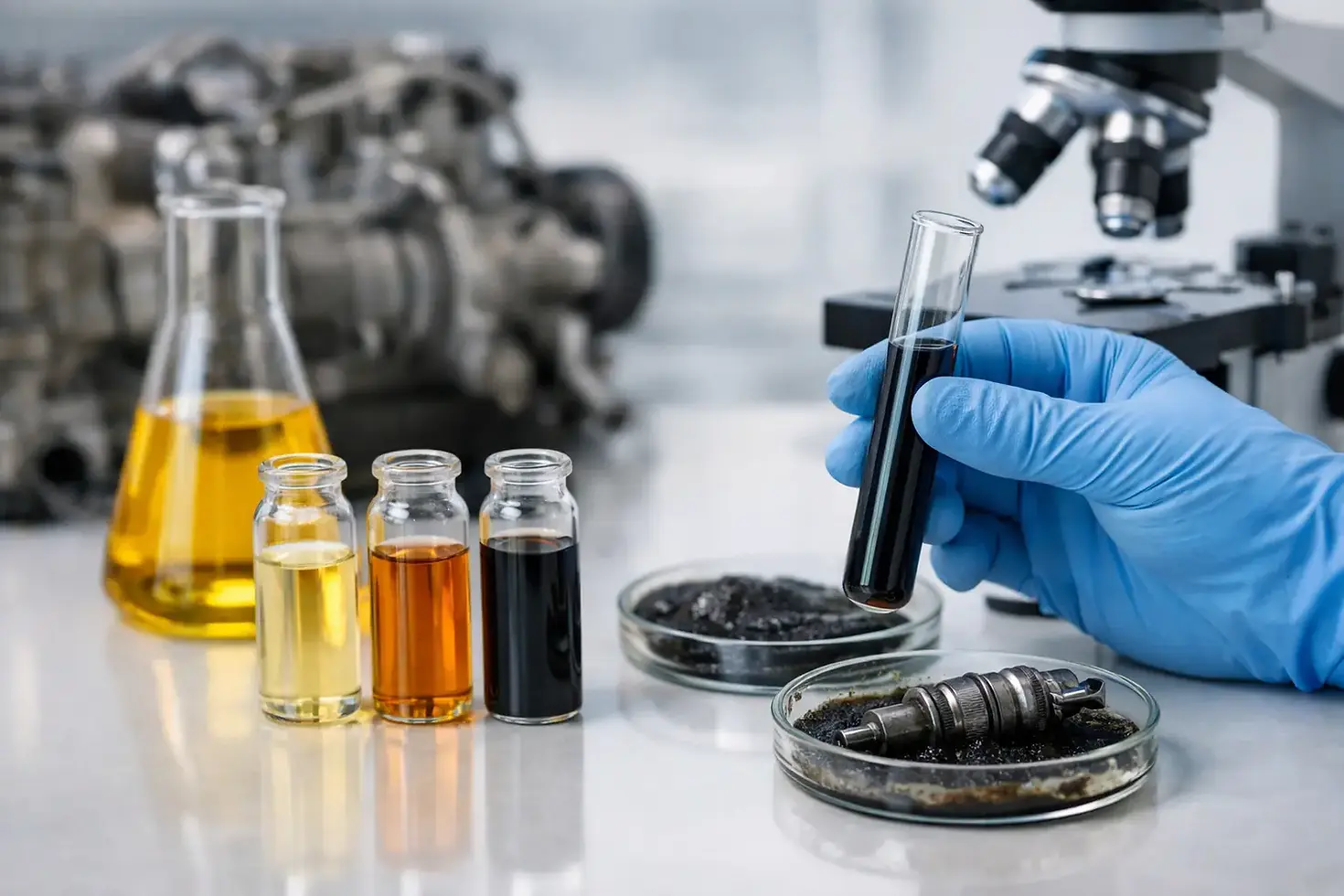
What Diesel Fuel Lab Testing Can Reveal About Failures
A diesel engine can arrive with hard starting, power loss, repeated filter restriction, injector faults, or high-pressure pump damage. Replacing the failed part without checking the fuel can turn one repair into a repeat failure. Diesel fuel lab testing gives the shop and equipment owner evidence of what has been moving through the system before expensive components are rebuilt or installed.
For a modern common-rail engine, fuel is more than a source of energy. It also lubricates closely fitted internal parts, carries contaminants toward the filters, and must remain stable during storage and operation. That is true for a highway truck, agricultural machine, standby generator, marine engine, or light-duty pickup. A clean-looking fuel sample is not proof that the fuel meets the requirements of injectors and high-pressure pumps.
Why Diesel Fuel Lab Testing Matters
Modern diesel injection systems work at extremely high pressures and use precision-machined components with very small internal clearances. Water, abrasive particles, microbial debris, or poor lubricity can quickly affect injector performance and pump life. The first symptom may be a rough idle or loss of power. In more serious cases, internal pump wear sends metal debris through the fuel rail, injectors, lines, and tank, creating a much larger repair.
Testing is especially valuable when a failure does not have an obvious mechanical cause. If several vehicles or pieces of equipment develop similar fuel-related problems, the question is not just which component failed. The question is whether the fuel source, storage tank, delivery process, or maintenance interval is contributing to the damage.
A laboratory result also helps separate a fuel-quality problem from a component problem. That distinction matters when deciding whether an injector can be cleaned and calibrated, whether a pump needs a full rebuild, or whether contamination has made replacement of multiple fuel-system components the safer repair.
What a Fuel Sample Can Show
The right test package depends on the application, the fuel type, the suspected issue, and the cost of downtime. A routine sample may focus on basic quality and contamination. A failure investigation may require more detailed analysis, particularly after injector or pump damage.
Water and sediment
Free water is one of the most common and destructive fuel-system contaminants. It can enter through poor tank sealing, condensation, contaminated bulk storage, or handling practices. Water reduces lubricity, supports microbial growth, promotes corrosion, and can cause filter restriction when temperatures drop.
Sediment testing identifies insoluble material in the fuel. This may include rust, dust, tank scale, degraded hose material, or debris introduced during refueling. Large particles may be caught by the filter, but the filter has a finite capacity. Fine abrasive contamination is particularly concerning because it can accelerate wear in pumps and injectors before a restriction problem becomes obvious.
Fuel cleanliness and particle contamination
Particle count testing provides a clearer picture than visual inspection. Diesel can look bright in a sample bottle while still containing enough fine material to threaten a high-pressure system. A cleanliness result can help determine whether contamination is coming from bulk storage, an aging vehicle tank, a damaged fuel cap, an improperly cleaned repair, or a failing component shedding debris internally.
The result should be interpreted alongside the condition of the removed filters and components. A clean sample taken after a new filter is installed may not tell the same story as a sample pulled upstream of the filter during an active failure. Sampling location and timing matter.
Lubricity
Ultra-low sulfur diesel has different lubricating properties than older diesel fuel formulations. Fuel must still provide sufficient lubricity for the moving internal surfaces of rotary pumps, common-rail pumps, and injectors. Low lubricity can contribute to scuffing and premature wear, particularly where a fuel system is already operating under heavy load or elevated temperature.
Lubricity results do not automatically prove that fuel caused a pump failure. Component wear, air intrusion, overheating, incorrect fuel, and internal contamination can produce similar symptoms. However, poor lubricity is a legitimate concern that should be addressed before installing a replacement pump or rebuilt injectors.
Microbial contamination
Microbial growth develops where water and fuel meet. It is more common in equipment that sits for extended periods, bulk tanks with water accumulation, marine applications, and seasonal machinery. The material produced by microbial activity can plug filters, corrode tanks, and create dark sludge that travels through the fuel supply system.
A biocide may be part of the corrective action, but it is not a complete fix on its own. Dead organisms and loosened deposits can continue to block filters. The source of water must be corrected, and the tank may need to be cleaned before the equipment returns to dependable service.
Oxidation, stability, and incorrect fuel
Stored diesel can degrade, particularly when exposed to heat, air, or long storage periods. Oxidation can create gums and insoluble material that affect filters and fuel-system operation. Testing can also identify concerns with fuel stability, unusual density, or a possible mix-up with gasoline, solvents, off-spec product, or another fluid.
Fuel contamination is not always dramatic. A small amount of incorrect product or an unsuitable additive can create problems that are hard to diagnose from engine codes alone. Laboratory analysis provides facts that help prevent assumptions during a costly repair.
When to Test Before a Major Repair
Fuel testing is not required for every routine maintenance visit. A well-maintained vehicle with no fuel-system symptoms may only need proper filter service and clean fuel practices. Testing becomes far more valuable when the risk of repeat damage is high.
It should be considered after high-pressure pump failure, repeated injector replacement, unexplained filter plugging, corrosion in the fuel system, or a suspected bad fuel event. It is also useful before recommissioning equipment that has been stored for months or years, especially if the tank condition is unknown.
Fleet operators may benefit from periodic testing of bulk storage tanks, not just individual vehicles. One contaminated storage source can affect multiple units, create avoidable downtime, and make it appear that several unrelated components failed at once. For seasonal agricultural, construction, marine, and standby-power equipment, testing before peak operating periods can be cheaper than diagnosing failures during the busiest week of the year.
Proper Sampling Determines Whether the Result Is Useful
A laboratory can only analyze the sample it receives. Taking a sample from the wrong point, using a dirty container, or collecting fuel after it has passed through a new filter can lead to misleading results. For an active vehicle issue, the best sample point depends on what the technician is trying to confirm.
A tank-bottom sample can reveal water and settled contamination. A sample from the supply side of the system may show what is reaching the filter. A sample taken from a failed component can support an investigation into internal wear or contamination. These samples answer different questions, so they should not be treated as interchangeable.
Use a clean, approved sample bottle, label it clearly, and record the unit number, engine type, fuel source, operating symptoms, date, and sampling location. If multiple units are affected, collect comparison samples from the bulk tank and from an unaffected unit. That gives the technician a stronger basis for identifying the source.
Turning Test Results Into the Right Repair Plan
The purpose of testing is not simply to generate a report. The result should direct the repair plan. If water or microbial contamination is present, the work may include draining and cleaning the tank, treating or replacing fuel, inspecting supply lines, and replacing filters before rebuilt components are fitted.
If particle contamination or metallic debris is found, the repair may need to extend beyond the visibly failed pump or injector. High-pressure lines, rails, tanks, and low-pressure supply components can retain debris. Skipping system cleaning can send contamination directly into a replacement component.
When lab results show acceptable fuel quality, diagnostics can focus more confidently on electrical control issues, air leaks, fuel-pressure regulation, injector calibration, turbocharger-related power concerns, or mechanical engine condition. This is where a specialist shop has an advantage: component bench testing, fuel analysis, calibration, and repair decisions can be considered together instead of as separate jobs.
West Coast Fuel Injection & Turbo Ltd. evaluates the complete fuel-system picture, from the condition of the fuel and filters to injector, pump, and turbocharger performance. That approach is particularly important when uptime depends on a repair lasting beyond the first test drive.
Before authorizing a high-pressure pump, injector, or full fuel-system replacement, ask what evidence explains the failure. A properly collected fuel sample may be the small step that prevents the same contamination from damaging the next set of precision components.
Comments