
Cummins Turbo Actuator Repair Basics
- Jul 3
- 6 min read
A Cummins engine that suddenly drops power, throws actuator-related fault codes, or starts hunting for boost under load usually does not need guesswork - it needs proper Cummins turbo actuator repair with the right diagnostics behind it. On modern diesel platforms, the actuator is not a simple bolt-on accessory. It is a calibrated electronic component that directly affects turbo vane position, boost control, emissions behavior, and overall drivability.
What the actuator actually does
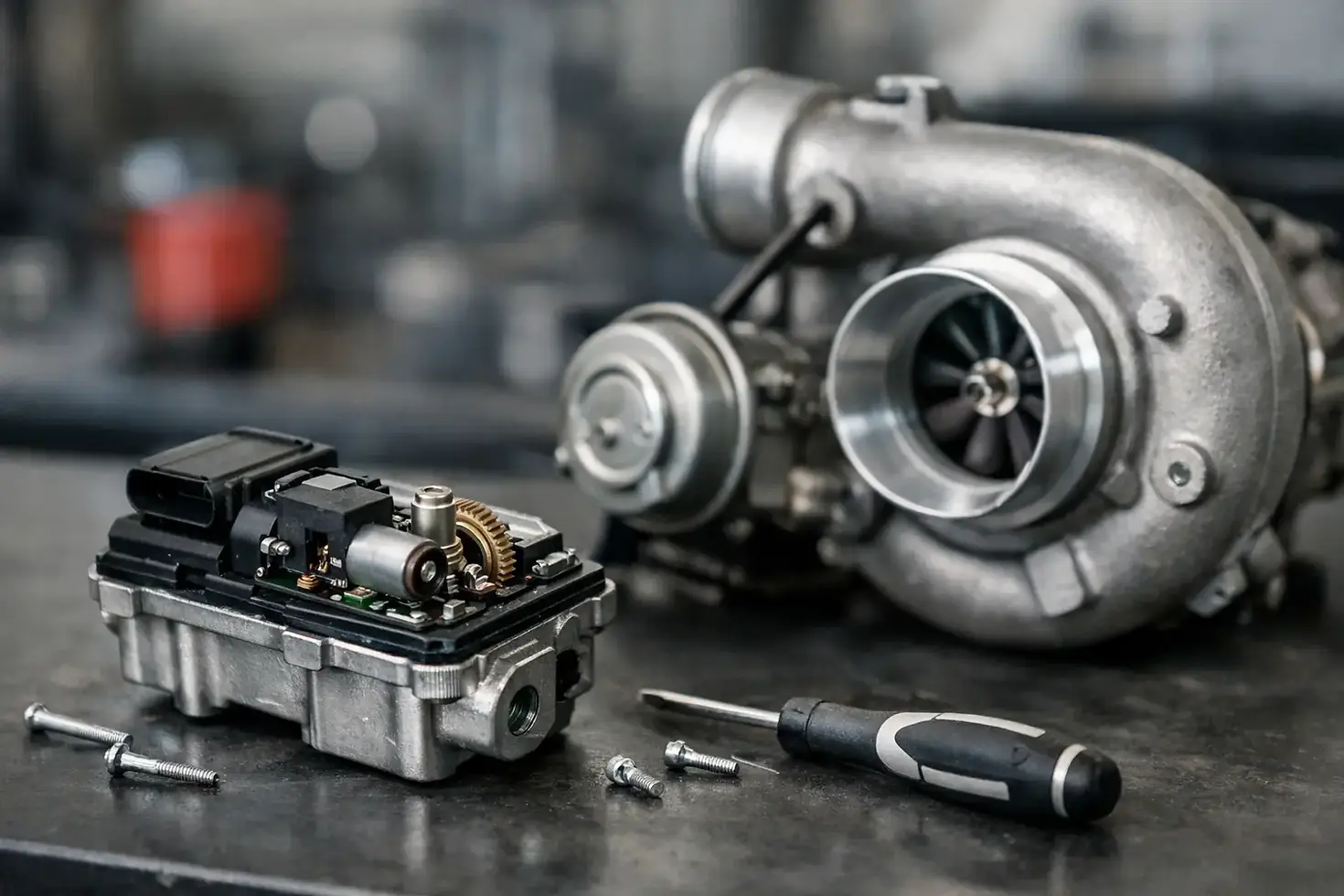
On many Cummins applications, the turbo actuator controls a variable geometry turbocharger by adjusting vane position based on engine load, RPM, exhaust flow, and command signals from the ECM. That movement changes how quickly the turbo spools and how efficiently it manages boost across different operating conditions.
When the actuator works correctly, the engine responds cleanly, makes controlled boost, and stays within intended emissions and performance parameters. When it starts to fail, the problem can look like several other issues at first. Drivers may report low power, poor throttle response, intermittent derate, excessive smoke, or a check engine light tied to turbocharger position or communication faults.
That is why actuator problems should never be treated as parts-swapping exercises. A failed actuator, a sticking unison ring, damaged vane mechanism, wiring fault, or calibration issue can all produce similar symptoms.
Common signs you may need Cummins turbo actuator repair
In the shop, the pattern is usually clear once proper testing begins. The most common signs include inconsistent boost, slow turbo response, fault codes related to actuator position, and engine derate under load. Some trucks will still run, but they feel flat on acceleration or lose pulling power on grades. Others may cycle in and out of reduced performance depending on heat, vibration, or electrical connection quality.
There are also cases where the actuator is blamed too quickly. Carbon buildup in the turbo’s variable geometry section can overload the actuator and trigger position errors even when the electronics are still functional. In other cases, the actuator motor or internal geartrain is damaged, but the turbocharger itself remains serviceable. The difference matters because the repair path, downtime, and cost can change significantly.
Why diagnosis comes before repair
A proper repair starts with fault code retrieval, live data review, command testing, and physical inspection. If the actuator cannot reach commanded position, the next step is determining why. That may involve checking power and ground, inspecting harness integrity, evaluating connector condition, and confirming whether the turbocharger mechanism moves freely.
This is where experience matters. On a working diesel platform, especially in commercial service, one failure can mask another. A truck with poor boost control may have an actuator fault, but it may also have exhaust leaks, sensor issues, sticking vanes, or previous improper installation. Replacing the actuator without addressing the root cause can lead to repeat failure.
At a qualified diesel turbo shop, the process typically includes bench evaluation where possible, inspection of the mating turbo components, and confirmation that the replacement or repaired actuator can be calibrated correctly to the turbocharger it is paired with.
Cummins turbo actuator repair is not always a simple replacement
Some actuator failures are internal and final. Water intrusion, corrosion, burned electronics, stripped gears, or severe motor failure can make replacement the only reliable option. But not every unit requires the same approach, and not every turbocharger needs to be replaced when an actuator stops working.
That is the practical value of component-level inspection. If the turbocharger is in good mechanical condition and the issue is isolated to the actuator, targeted repair can make sense. If the actuator failed because the vane system is binding or the turbo has excessive wear, replacing only the actuator may be short-lived. A good shop will make that distinction before parts are installed.
This is especially important for fleets and owner-operators trying to control downtime without cutting corners. The cheapest path on paper is not always the least expensive in service.
Calibration is where many repairs go wrong
One of the most overlooked parts of Cummins turbo actuator repair is calibration. These actuators are not install-and-go components. After installation, many applications require programming or calibration so the actuator can learn correct stop points and vane positions relative to that specific turbocharger.
If calibration is skipped, rushed, or attempted with the wrong tooling, the engine may still set codes, run poorly, or overwork the replacement component. Improper setup can also create false assumptions about a bad new actuator when the real issue is incorrect adaptation.
This is why repair quality depends on more than access to parts. It depends on using the right diagnostic equipment, following the correct procedure, and verifying operation after calibration under real working conditions.
Repair or replace the whole turbo?
That decision depends on the condition of both the actuator and the turbocharger itself. If the compressor and turbine sides are healthy, shaft play is within spec, and the variable geometry mechanism is clean and free, actuator replacement and calibration may be the right repair. If the turbo shows wear, contamination, sticking vanes, or heat damage, a broader turbo repair or remanufactured replacement may be the smarter move.
There is no universal answer because duty cycle matters. A highway truck, off-road machine, marine engine, and agricultural unit can fail differently even with similar Cummins architecture. Soot load, idle time, operating temperature, maintenance history, and previous repairs all affect whether the actuator failed on its own or failed because the turbo system was already compromised.
That is also where a full-service diesel shop has an advantage. When turbocharger repair, actuator diagnostics, cleaning, testing, and related fuel system support are handled in one facility, you get a more complete picture of the engine’s condition instead of a narrow one-part diagnosis.
What a professional repair process should include
A professional job should start with electronic diagnostics and fault verification, then move into visual and mechanical inspection of the turbocharger and actuator assembly. From there, the technician should determine whether the concern is electrical, mechanical, calibration-related, or a combination of those issues.
If the actuator is replaced, the mating surfaces, linkage, and turbo movement need to be checked carefully. If the turbocharger is serviced or rebuilt, the actuator setup must match the repaired unit correctly. Final calibration and post-repair validation are essential. That means clearing faults, confirming commanded versus actual position, and verifying boost response during operation.
For working trucks and equipment, the last step is just as important as the first. A repair is only complete when the engine performs properly under load, not just when the fault light turns off.
When downtime matters, specialist support matters more
Actuator problems often show up at the worst time - during heavy hauling, seasonal farm work, marine service windows, or when a fleet vehicle cannot afford to sit. In those cases, fast turnaround matters, but so does getting the repair right the first time.
That is why many operators prefer a diesel specialist instead of a general repair path. A shop with experience in turbochargers, fuel systems, remanufacturing, bench testing, and calibration can usually identify whether the actuator is the true failure point or part of a larger turbo system issue. For customers in Richmond, Vancouver, Surrey, Langley, Abbotsford, Vancouver Island, Victoria, Nanaimo, Kelowna, and Penticton, that local technical support can reduce unnecessary downtime and repeat repairs.
West Coast Fuel Injection & Turbo Ltd. works with the kinds of diesel systems where actuator faults are rarely isolated from the rest of the engine’s operating condition. That broader diagnostic view is what prevents a turbo control problem from turning into a second repair bill.
The real goal of Cummins turbo actuator repair
The goal is not simply to replace a failed electronic part. It is to restore correct turbo control, protect engine performance, and return the unit to dependable service. Sometimes that means replacing and calibrating the actuator. Sometimes it means cleaning, rebuilding, or replacing the turbocharger as well. Sometimes it means tracing an electrical or control issue that looks like actuator failure but is not.
Good repair work starts with accurate diagnosis and ends with verified operation. If your Cummins-powered truck or equipment is showing turbo actuator faults, low boost, or derate symptoms, the best next step is not guessing which part to order. It is getting the system tested by a shop that understands the actuator, the turbocharger, and the diesel engine around it.
Comments