
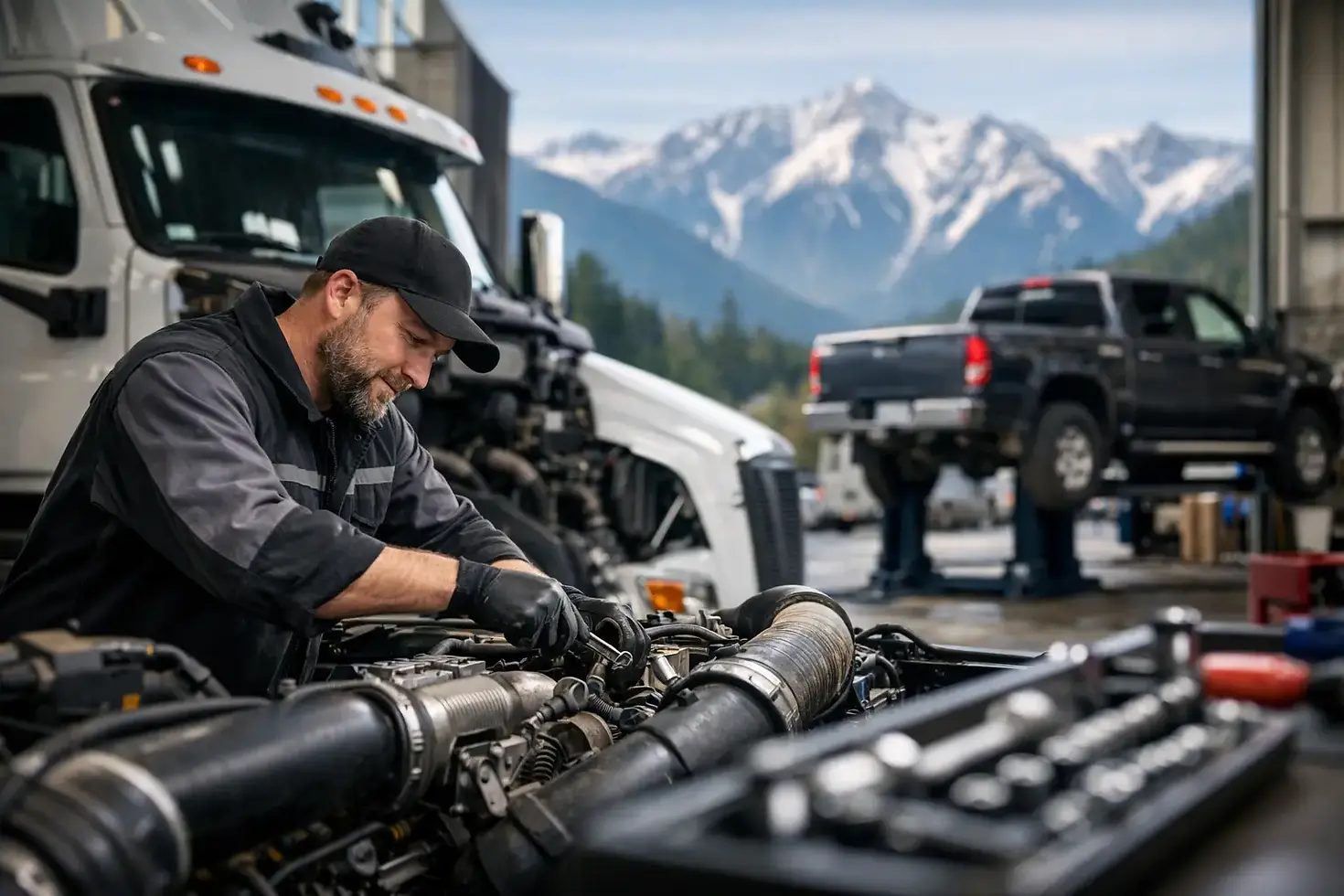
Diesel Repair Fraser Valley Drivers Can Trust
A diesel that is hard to start, smoking under load, losing boost, or consuming more fuel is not giving a complete diagnosis through one symptom. For dependable diesel repair Fraser Valley operators can count on, the work needs to begin with accurate testing of the fuel and air systems - not a guess, not a parts swap, and not a temporary adjustment that leaves the real fault in place.
That matters whether the engine is in a pickup, highway tractor, excavator, farm machine, generator, workboat, or industrial unit. Modern diesel systems operate at high pressure and within narrow tolerances. A weak injector, worn high-pressure pump, sticking turbo actuator, damaged vane mechanism, or restricted fuel supply can all create similar complaints. The right repair depends on identifying which component has actually failed and why.
Why Specialized Diesel Diagnosis Matters
Diesel fuel systems and turbochargers are precision assemblies. An injector may look clean externally while delivering poor spray pattern, excessive return flow, or an incorrect fuel quantity. A turbocharger can have no obvious wheel damage yet fail to build proper boost because of actuator trouble, vane binding, an exhaust leak, a charge-air leak, or an engine-side issue affecting drive pressure.
Replacing expensive components before testing can cost more than the original failure. It can also create a second problem. For example, installing new injectors without addressing contaminated fuel, a failing supply system, or incorrect filtration can shorten the life of the replacement set. Replacing a turbo without correcting oil-feed restrictions, crankcase pressure, intake debris, or a blocked exhaust can lead to another turbo failure.
A proper diagnostic process considers the entire system. That includes fault codes and live data where applicable, but it also includes hands-on checks, pressure testing, inspection of related lines and filters, and component-level bench testing when required. Electronic diagnostics point a technician in the right direction. They do not replace mechanical verification.
Common Problems Behind Diesel Performance Complaints
The same concern can have different causes depending on engine platform, duty cycle, maintenance history, and operating conditions. A heavy-duty truck running long grades, a farm tractor working seasonal loads, and a light-duty diesel used for short trips do not wear components in the same way.
Injector Problems: More Than a Rough Idle
Diesel injectors meter fuel in extremely small, precisely timed events. When an injector begins to wear, stick, leak internally, or lose spray quality, the engine may develop a rough idle, hard starting, haze or black smoke, fuel knock, poor mileage, or uneven power delivery. On common-rail systems, excessive injector return flow can reduce rail pressure enough to affect starting and drivability.
Injector testing is valuable because it separates a suspected injector issue from an actual injector failure. Bench testing can assess opening pressure on applicable mechanical systems, delivery, return flow, spray pattern, leakage, and other performance measures. Calibration and rebuild work should match the requirements of the specific injector design rather than relying on a one-size-fits-all approach.
The trade-off is simple: testing takes more care than installing a replacement based on a code alone. But it can prevent unnecessary replacement of good components and identify a system problem that would otherwise damage the repaired unit.
Fuel Pumps and Supply-Side Faults
A diesel engine cannot make consistent power without stable, clean fuel delivery. High-pressure fuel pumps, injection pumps, lift pumps, fuel control components, filters, pickup tubes, and fuel lines all play a role. Low supply pressure, air entry, water contamination, debris, or internal pump wear can create low-power conditions that are often mistaken for injector or turbo failure.
Some high-pressure pump failures are especially serious because internal wear can send metal contamination through the fuel system. In that situation, replacing only the pump may not be enough. The injectors, rails, lines, tank, and related components may require inspection and cleaning or replacement depending on the extent of contamination. Skipping that work can put a rebuilt or new pump at immediate risk.
Fuel pump repair and calibration require the correct equipment and specifications for the application. Engines using Bosch, Denso, Stanadyne, Cummins, Caterpillar, Volvo, and other systems have different designs and service requirements. Matching the work to the component is essential.
Turbocharger Failures Are Often System Failures
A turbocharger operates at high speed and high temperature, so small problems can become major damage quickly. Blue smoke, excessive oil use, low boost, a siren-like noise, poor acceleration, or recurring underboost codes all deserve prompt attention. However, the turbo itself is not always the root cause.
Oil starvation, contaminated oil, excessive crankcase pressure, foreign-object damage, restricted intake plumbing, exhaust restrictions, leaking charge-air coolers, and actuator faults can each affect turbocharger performance. Variable-geometry turbochargers add another layer of diagnosis because vane movement, electronic control, and actuator calibration may all influence boost response.
A quality rebuild or replacement starts with inspection. The housing, wheels, shaft assembly, bearing system, actuator, and control hardware need to be evaluated, along with the engine conditions that may have caused the original failure. Installing a turbo correctly also means checking oil supply and drain paths, priming as required, inspecting intake and charge-air plumbing, and confirming that the engine is not sending debris or excessive oil into the replacement unit.
What a Complete Repair Process Should Include
The best repair path depends on the failure, but a capable diesel component shop should be able to move from diagnosis through repair without sending critical work through multiple vendors. That reduces downtime and helps maintain accountability from the first test to final installation support.
For many diesel repairs, the process includes inspection of the complaint and related systems, diagnostic testing, removal and assessment of suspect components, bench testing where appropriate, cleaning, rebuilding or remanufacturing, calibration, and verification before the component returns to service. OEM parts sourcing may be the right option in some cases, while a properly rebuilt and calibrated component can be a practical, cost-conscious solution in others.
There is no universal answer between replacement and rebuild. Availability, component condition, intended service life, warranty requirements, and the cost of equipment downtime all matter. A fleet truck needed back on the road quickly may require a different decision than an agricultural machine being serviced before peak season. The key is making that decision from test results and application requirements, not assumptions.
Diesel Repair for Equipment That Cannot Sit Still
For commercial operators, downtime is rarely limited to the repair invoice. A truck that cannot pull a load, a construction machine parked on a jobsite, or a marine engine that cannot be trusted offshore affects schedules, labor, customers, and revenue. Preventive attention to fuel quality, filter intervals, boost leaks, oil service, and early changes in engine behavior can reduce the chance of a major failure.
Watch for hard starts, longer crank times, new smoke patterns, loss of pulling power, higher fuel use, boost-related codes, unusual turbo noise, fuel in the oil, or repeated filter plugging. None of these symptoms automatically identifies one failed component, but each is a reason to test before damage becomes more extensive.
For equipment owners in the Fraser Valley, access to specialists matters because diesel work is often component-specific. A general repair facility may handle installation and routine service well, while injector calibration, pump testing, and turbocharger rebuilding call for dedicated equipment and trained technicians. West Coast Fuel Injection & Turbo Ltd. supports this level of work with in-house fuel-system and turbocharger service for light-duty, heavy-duty, agricultural, industrial, and marine applications.
Choose Testing Before Parts Replacement
When a diesel begins to run differently, document the symptoms before they disappear. Note when the issue occurs, whether it changes under load, what fuel or maintenance work was completed recently, and whether warning lights or fault codes are present. That information gives the diagnostic process a stronger starting point.
Then give the repair shop room to test the system properly. The fastest route back to reliable operation is not always the fastest-looking repair. A tested injector, calibrated pump, correctly rebuilt turbocharger, and verified installation can protect the engine, control costs, and keep the machine doing the work it was built to do.
Comments