
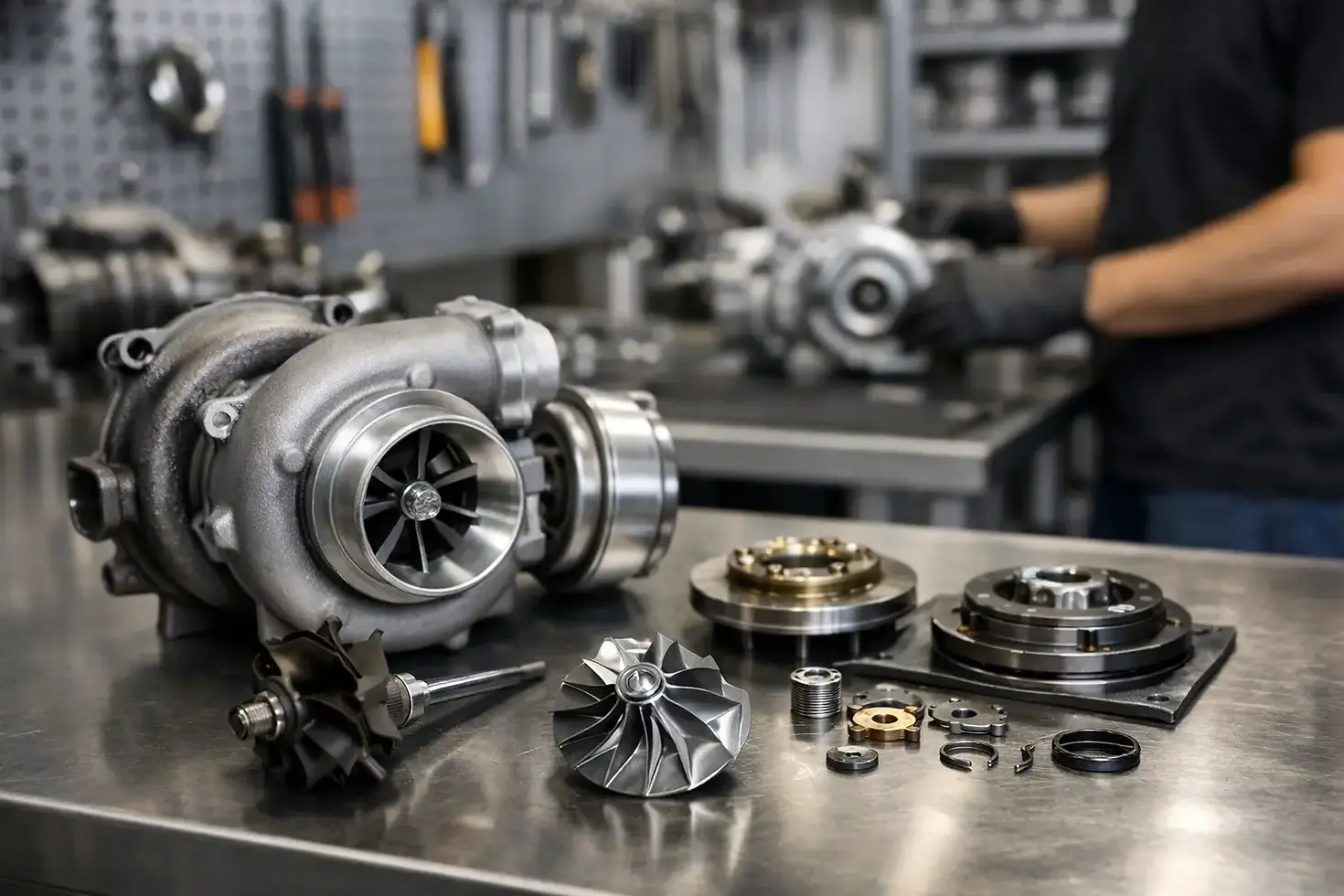
Turbocharger Rebuild Shop BC Selection Guide
A failed turbo is rarely just a failed turbo. On a work truck, excavator, marine engine, or diesel pickup, it can be the visible result of oil contamination, restricted air flow, an exhaust issue, fueling problems, or a failed control component. When searching for a turbocharger rebuild shop BC operators can depend on, the right question is not simply, Can this unit be rebuilt? It is, What caused the failure, and will the rebuilt unit be verified before it goes back on the engine?
A quality rebuild can be a practical, cost-effective repair. A poor rebuild can put the engine, aftertreatment system, and uptime at risk. The difference comes down to inspection standards, component quality, precision balancing, testing capability, and the technician's ability to look beyond the turbocharger itself.
What a Turbocharger Rebuild Should Actually Include
A turbocharger is a high-speed assembly operating in severe heat and pressure. The shaft, turbine wheel, compressor wheel, bearing system, seals, housings, wastegate or variable geometry mechanism, and actuator must work together within tight tolerances. Replacing a few visibly damaged parts without measuring the rest is not a rebuild process that serious diesel equipment should rely on.
The work should begin with a complete teardown and cleaning. Carbon buildup on the turbine side, oil residue in the compressor housing, damaged threads, cracked housings, and worn bearing bores all need to be assessed before a shop decides whether the unit is a suitable rebuild candidate. Some housings can be reused after proper cleaning and inspection. Others are unsafe or uneconomical to put back into service.
The rotating assembly deserves particular attention. Shaft damage, wheel contact, foreign-object impact, and excessive clearance can indicate more than ordinary wear. A compressor wheel that has contacted the housing, for example, may point to bearing failure, oil starvation, overspeeding, or debris entering the intake tract. Installing new bearings alone will not correct those conditions.
A professional shop also checks the condition and operation of the control side of the turbo. Depending on the application, that may include a wastegate, variable geometry turbo mechanism, vacuum actuator, electronic actuator, position sensor, or linkage. Modern VGT systems are especially sensitive. If the vane mechanism sticks from soot buildup or the actuator is not set and calibrated correctly, a rebuilt center section will not solve the underlying boost-control problem.
Why High-Speed Balancing Is Not Optional
Turbocharger shafts turn at speeds far beyond what can be evaluated by hand. At operating speed, a small imbalance can create vibration that damages bearings, seals, and wheels quickly. This is why precision balancing is one of the clearest differences between a component specialist and a shop that treats turbo work as a parts swap.
A proper rebuild process should include balancing the rotating components and verifying the completed core assembly under high-speed conditions when applicable. The goal is stable operation at speeds that represent the stresses the turbo will see in service. A unit can appear smooth on the bench at low speed and still fail once it is exposed to exhaust energy and full boost demand.
Balancing is not a substitute for quality parts or correct assembly, but it is essential to the finished result. It also protects the customer from the expensive cycle of reinstalling a turbo, losing it early, and paying again for diagnosis and labor.
Rebuild, Remanufacture, or Replacement: It Depends on the Unit
Not every turbocharger should be rebuilt. The decision depends on the application, the available parts, the condition of the housings and wheels, the type of failure, and the cost of downtime.
A rebuild may make sense when the housings are serviceable, quality replacement components are available, and the damage is confined to the bearing system, seals, or core assembly. This is common on many commercial, agricultural, industrial, and marine applications where a specialist can inspect the complete unit and restore it to dependable service.
Remanufacturing can involve a more comprehensive restoration process with controlled replacement of wear items and critical components. It is often the right choice for fleet and equipment owners who need consistent quality across repeat applications. In other cases, a new OEM or OEM-quality replacement turbo is the better path, particularly where the electronic actuator is not serviceable, the housings are damaged, or the application has strict emissions and calibration requirements.
The lowest upfront price is not always the lowest repair cost. A bargain replacement unit with questionable materials, poor actuator setup, or no meaningful testing can create repeat labor and added engine damage. For equipment that earns its keep every day, the practical calculation includes downtime, access, installation labor, and the risk of another failure.
The Root Cause Matters as Much as the Rebuild
A rebuilt turbocharger needs clean oil at the correct pressure, unrestricted oil drain flow, clean intake air, and an exhaust system that allows it to operate within design limits. If any of those conditions are ignored, even a correctly rebuilt unit can fail prematurely.
Oil starvation is a common concern. Restricted feed lines, contaminated oil, incorrect oil viscosity, damaged fittings, or delayed oil changes can damage the bearing system quickly. On the other side, a restricted drain line or excessive crankcase pressure can force oil past the seals and create smoke, oil consumption, and compressor or turbine contamination.
Air-side issues also need attention. A collapsed intake hose, blocked air filter, loose charge-air connection, or debris upstream of the compressor can reduce performance or damage the wheel. Exhaust leaks before the turbo can affect spool-up, while restrictions downstream may increase exhaust backpressure and heat. On diesel engines, fueling faults, injector problems, EGR concerns, and aftertreatment restrictions can all influence turbocharger operation.
This is why a one-stop diesel specialist has a real advantage. A shop that can diagnose turbochargers alongside fuel injectors, high-pressure fuel pumps, and related engine systems is in a better position to identify the failure pattern instead of replacing parts one at a time. West Coast Fuel Injection & Turbo Ltd. applies that component-level approach across light-duty, heavy-duty, industrial, agricultural, and marine equipment.
Questions to Ask a Turbocharger Rebuild Shop in BC
Before authorizing work, ask how the shop determines whether your turbo is rebuildable and what is included in the inspection. The answer should go beyond new bearings and seals. Ask whether the rotating assembly is high-speed balanced, whether the VGT mechanism or actuator is checked when applicable, and whether the shop can identify likely causes of the original failure.
It is also reasonable to ask about the source and grade of replacement parts. A specialist should be able to explain whether OEM, OEM-quality, or application-specific components are being used and why. This matters because a turbocharger that fits physically is not necessarily correct for the engine calibration, exhaust configuration, or duty cycle.
For commercial equipment, communication matters as much as the repair itself. A useful shop will tell you if a housing is cracked, if an actuator creates a cost issue, if the core is not serviceable, or if a replacement unit is the more dependable decision. Clear information lets a fleet manager, owner-operator, or equipment manager make a repair decision based on risk and uptime rather than guesswork.
Installation Can Make or Break the Repair
Before installation, the engine oil and filter should be addressed according to the failure condition and manufacturer requirements. Oil feed and drain lines need inspection for restriction, carbon buildup, damage, and leaks. Intake and charge-air piping should be checked for debris, oil pooling, failed clamps, and loose connections. If the original turbo failed catastrophically, fragments can remain in the intake tract or intercooler and must be removed before a replacement unit is installed.
The turbo must be primed and installed with the correct gaskets, hardware, and oil connections. Once running, the technician should verify oil leaks, boost behavior, exhaust leaks, actuator operation, fault codes, and abnormal smoke or noise. On electronically controlled applications, proper setup may require scan-tool diagnostics and calibration procedures rather than a simple bolt-on installation.
For customers in Richmond, Vancouver, the Fraser Valley, Vancouver Island, or the Okanagan, access to a local component specialist can reduce the delay between diagnosis, repair, and installation support. That matters when a truck, boat, farm machine, or generator cannot sit waiting for an uncertain parts solution.
A turbocharger repair should leave you with more than restored boost. It should give you a clear view of why the unit failed, what was corrected, and what the engine needs to stay in service. That is the standard worth looking for before the next load, jobsite shift, or run offshore.
Comments