
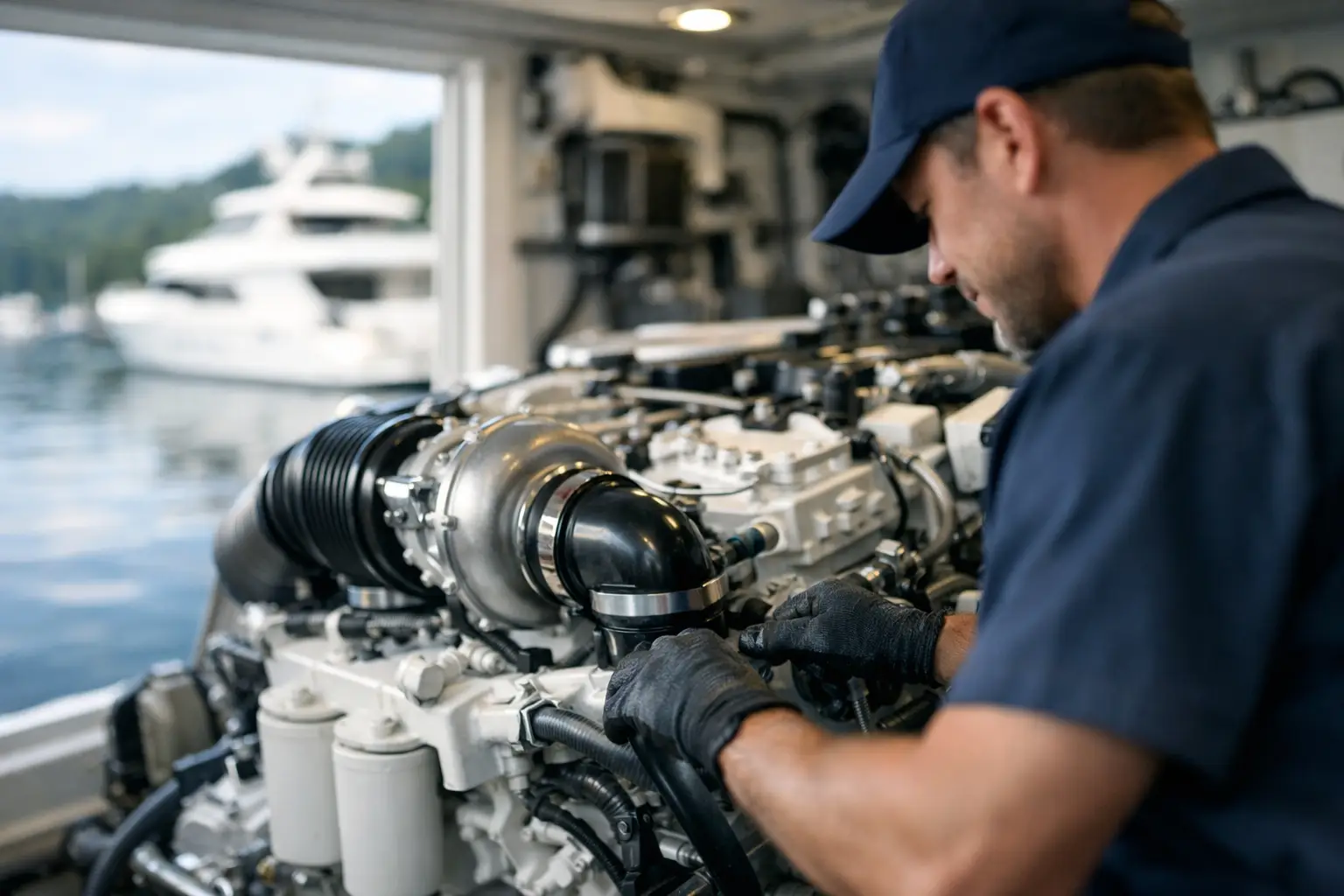
Marine Diesel Service Victoria for Reliable Power
A diesel that idles cleanly at the dock can still have a fuel-system or turbocharger problem waiting to show up under load. That is why marine diesel service Victoria boat owners schedule should go beyond an oil change and a quick visual inspection. A proper service plan checks the systems that determine whether the engine will make rated power, start reliably, and run safely when the vessel is away from the marina.
For commercial operators, downtime affects schedules and revenue. For fishing boats, workboats, and recreational vessels, it can also become a safety issue. Salt air, wet bilges, seasonal storage, low engine hours, and long periods at constant RPM all place different demands on diesel components than highway use. The right repair approach starts with identifying the actual fault rather than replacing expensive parts based on symptoms alone.
What Marine Diesel Service in Victoria Should Include
Marine diesel service is not one task. It is a system-level inspection and repair process that should match the engine's age, application, operating hours, and service history. Basic maintenance still matters: clean fuel filters, correct oil and coolant condition, belt inspection, raw-water pump service, and attention to zincs all protect the engine. But declining power, smoke, hard starting, surging, high exhaust temperature, or excessive fuel use often point to components requiring specialized testing.
The fuel system deserves particular attention. Modern common-rail systems operate at extremely high pressure, while many mechanical marine diesels depend on accurate injector opening pressure and injection-pump timing. In either case, a restriction, internal leak, contaminated fuel, worn injector nozzle, or weak pump can change combustion quality long before a complete no-start occurs.
Turbocharged engines add another critical system. A turbocharger that cannot build or control boost will leave the engine underpowered and can produce black smoke under load. Conversely, a turbo issue may be the result of an upstream or downstream problem, including air restriction, exhaust restriction, improper fueling, oil contamination, or poor crankcase ventilation. Replacing a turbo without determining why the original unit failed can lead to another failure quickly.
Start With Symptoms, Then Test the Components
A good marine diesel diagnosis separates what the operator feels from what the technician can measure. “It has no power” is useful information, but the conditions matter: Does the power loss occur only at full throttle? Is there black, white, or blue smoke? Did fuel consumption change? Does the problem begin after the engine reaches operating temperature? Has the vessel sat through a winter layup, or was contaminated fuel recently found in the tank?
From there, the service process can include scan-tool fault checks where supported, fuel-supply inspection, pressure and return-flow testing, boost verification, exhaust and intake inspection, and evaluation of oil supply to the turbocharger. When injectors, pumps, or turbos are suspected, component-level bench testing provides a more reliable answer than visual inspection alone.
A diesel injector can appear acceptable externally while delivering poor spray pattern, incorrect fuel quantity, or excessive leakage. A high-pressure pump may hold enough pressure to start the engine but fail to maintain required pressure under load. A turbocharger may spin freely by hand yet have bearing damage, vane-control issues, imbalance, or oil leakage that only becomes clear during proper inspection and testing.
Fuel Quality Is a Marine Maintenance Issue
Marine fuel is often stored longer than vehicle fuel. Condensation, microbial growth, tank debris, water intrusion, and degraded fuel can create restrictions and accelerate wear in injectors and pumps. Water is especially damaging because diesel fuel normally provides lubrication to precision fuel-system parts. Once corrosion or scoring begins inside a pump or injector, flushing the system may not be enough.
Fuel filters should be serviced on schedule and whenever a contamination concern appears. Draining water separators, inspecting the filter element, and checking the tank pickup and venting can prevent a small fuel-supply problem from becoming an injector or pump repair. If a high-pressure component has failed internally, technicians should also consider whether debris has entered the rails, lines, injectors, or fuel tank. Installing one rebuilt component into a contaminated system is not a complete repair.
For vessels that sit for extended periods, fuel management should be part of seasonal preparation. Keep tanks managed according to the vessel manufacturer's recommendations, use quality fuel from a reliable source, and address water or microbial contamination promptly. Additives have a place when used correctly, but they cannot restore a worn injector or compensate for an obstructed fuel supply.
When a Turbocharger Needs More Than an Inspection
Marine turbochargers operate in a demanding environment. Heat, vibration, load, moisture, and oil condition all affect service life. Common warning signs include a noticeable drop in power, black exhaust smoke, whistling or siren-like noise, oil consumption, oil in the charge-air system, or an engine that cannot reach normal RPM under load.
Those signs do not automatically confirm turbo failure. A blocked air filter, damaged charge-air hose, fouled aftercooler, restricted exhaust elbow, or fueling fault can create similar symptoms. This is where a specialist diagnosis protects the customer from unnecessary replacement costs.
When a turbo does require service, the repair standard matters. The unit should be disassembled, cleaned, inspected for housing and wheel damage, rebuilt with quality parts where appropriate, and balanced to specification. The engine-side cause must be addressed as well. Clean oil supply and drain lines, correct oil pressure, a clean intake path, and proper shutdown practices are all important to the life of the replacement or rebuilt turbocharger.
A Practical Service Schedule for Marine Diesels
Service intervals depend on engine manufacturer requirements, annual hours, operating conditions, and whether the vessel is used commercially. A charter boat running hundreds of hours each season needs a different plan than a pleasure boat that sees limited use. Still, these checks help operators catch problems before they become major repairs:
Before regular operation, inspect engine oil, coolant, belts, hoses, fuel-water separator condition, and visible fuel or oil leaks.
At scheduled maintenance intervals, replace fuel filters, inspect the intake and charge-air plumbing, and review engine performance, smoke, and starting behavior.
Before peak season, verify cooling-system condition, check turbocharger air and oil connections, and investigate any RPM or load concerns during a sea trial.
After a fuel contamination event or an internal component failure, inspect the entire affected system rather than replacing only the failed part.
During layup or extended inactivity, follow the engine manufacturer's storage procedures and make a plan to address fuel condition before returning to service.
Keep written records of service dates, engine hours, fuel-filter changes, fault codes, and performance observations. A record showing when a hard-start condition began or when full-load RPM first dropped gives a technician useful diagnostic direction. It also makes it easier to distinguish a gradual wear problem from a sudden fault.
Why Bench Testing and Calibration Matter
Injector, fuel-pump, and turbocharger work is precision work. Small deviations in fuel delivery, injector spray, calibration, or turbo balance can affect combustion temperature, power output, emissions, and component life. This is not a job for guesswork or generic parts substitution.
West Coast Fuel Injection & Turbo Ltd. supports marine operators with diagnostics, in-house testing, calibration, repair, rebuilds, remanufacturing, and installation support for diesel injectors, high-pressure pumps, and turbochargers. The workshop handles a broad range of marine and industrial applications, including systems from major manufacturers such as Bosch, Denso, Cummins, Caterpillar, Volvo, and Stanadyne.
The best repair choice depends on what testing finds. In some cases, cleaning and calibration restore a serviceable component. In others, a rebuild or remanufactured unit is the sensible option. Severe contamination, corrosion, cracked housings, or damage that affects safe operation may require replacement. A capable diesel shop should explain that distinction clearly, including what caused the failure and what must be corrected before the engine returns to work.
Do Not Wait for a Dockside Breakdown
A marine diesel usually provides warnings before it leaves a vessel stranded. Longer cranking, uneven idle, increased smoke, poor throttle response, rising fuel use, unusual turbo noise, or a loss of full-load RPM are all worth investigating. Waiting until the engine will not start can turn a controlled repair into a larger fuel-system cleanup, a missed trip, or an interrupted commercial operation.
If the engine's performance has changed, document the conditions and have the fuel and air systems tested before replacing parts. Accurate diagnosis, clean fuel, correctly calibrated components, and repairs made to the proper standard give your marine diesel the best chance of delivering dependable power when the water is not forgiving.
Comments